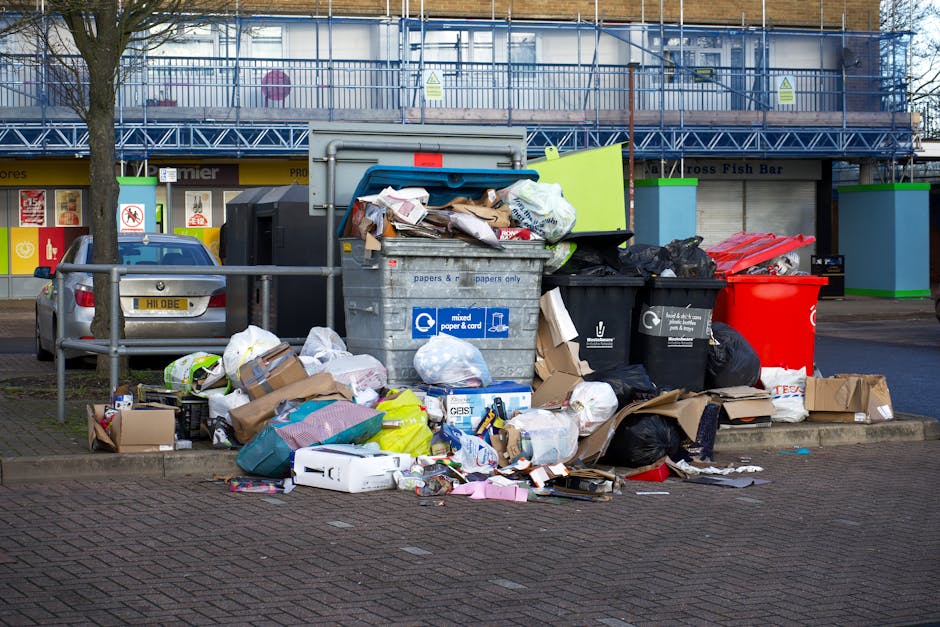
Access problems for rubbish collection Staines Road Egham
If you have ever tried to organise a rubbish collection on Staines Road in Egham and thought, "Why is this suddenly so awkward?", you are not alone. Narrow driveways, parked cars, shared access, awkward turning points, low hanging branches, tight front gardens, and busy roadside pickups can all turn a simple collection into a bit of a faff. Access problems for rubbish collection Staines Road Egham are usually less about the waste itself and more about how safely and quickly a vehicle, crew, and load can reach it.
This guide breaks the issue down in plain English. You will learn what access problems really mean, why they matter, how they affect collections, and what you can do before the team arrives to make everything smoother. We will also cover common mistakes, practical checks, compliance points, and the best way to decide whether a standard collection, a different vehicle, or a more flexible waste removal service is the better fit. To be fair, a little planning goes a long way here.
One small note before we get into it: access issues are often solvable. Not always instantly, and not always with the original plan, but usually with the right information and a calm approach.
Table of Contents
- Why Access problems for rubbish collection Staines Road Egham Matters
- How Access problems for rubbish collection Staines Road Egham Works
- Key Benefits and Practical Advantages
- Who This Is For and When It Makes Sense
- Step-by-Step Guidance
- Expert Tips for Better Results
- Common Mistakes to Avoid
- Tools, Resources and Recommendations
- Law, Compliance, Standards, or Best Practice
- Options, Methods, or Comparison Table
- Case Study or Real-World Example
- Practical Checklist
- Conclusion
- Frequently Asked Questions
Why Access problems for rubbish collection Staines Road Egham Matters
Access is one of those things people only notice when it goes wrong. On a street like Staines Road, where traffic flow, parking patterns, and property layouts can vary quite a lot, the difference between an easy collection and a stressful one can come down to a few metres of clearance. If a vehicle cannot stop safely, if waste is too far from the kerb, or if a crew cannot get equipment where it needs to go, the whole job becomes slower and less efficient.
That matters for a few reasons. First, it can affect safety. Crews need stable footing, enough room to move items without twisting, and clear access to the load area. Second, it can affect timing. A collection that should take a short window can drag on if items have to be carried one by one from a difficult location. Third, it can affect cost or whether the job can be done at all, because access limitations may change the vehicle type, staffing, or removal method required.
There is also the practical side. If waste is left near a front gate, along a narrow path, or in a spot blocked by a neighbour's car, the collection might need extra coordination. That is not a disaster, but it does need planning. If you are dealing with repeated collections for a home, flat, shop, or office, access issues can be the difference between a tidy service and a day full of back-and-forth calls. And nobody really wants that.
In real life, the people who handle access well tend to have fewer delays, less stress, and fewer surprises. That alone makes it worth doing properly.
How Access problems for rubbish collection Staines Road Egham Works
At a basic level, a rubbish collection team needs three things: safe vehicle access, safe pedestrian access, and a practical route between the waste and the vehicle. If any one of those is compromised, the collection plan may need to change.
Access problems usually show up in one of several ways:
- Restricted road access - parking, traffic, or road width makes it difficult for a lorry or van to stop near the property.
- Limited property access - narrow side passages, steep steps, narrow gates, low arches, or tight corners slow everything down.
- Distance from waste to vehicle - the further crews must carry bulky items, the more time and labour the job needs.
- Vehicle mismatch - the collection vehicle may be too large for the street or too small for the volume of waste.
- Shared access complications - flats, terraces, commercial yards, and mews-style properties can involve multiple users or blocked entrances.
What happens next depends on the collection provider. A good team will usually assess the route, ask for photographs, and decide whether a standard pickup is suitable. If not, they may suggest a smaller vehicle, a staggered collection, a different time slot, or a more hands-on removal approach. In some cases, items can be loaded from the front of the property, with the team bringing the necessary equipment to move them safely. In others, the waste needs to be brought closer to a clear access point before the crew arrives.
On Staines Road, the details matter. A location that looks fine during a quiet morning may be very different at school run time or peak traffic. That is why access questions are not just administrative; they are operational. A few good photos and honest measurements can save a lot of trouble later. Honestly, it is one of the simplest ways to avoid the dreaded "we'll need to reschedule" conversation.
If you are planning a broader clearance rather than a simple pickup, it can help to look at waste removal options and see which service type fits the access situation best. For more complex household jobs, home clearance support can be useful where access and sorting need to be handled together.
Key Benefits and Practical Advantages
Sorting access properly is not just about avoiding problems. It brings real, everyday advantages that make the whole process feel easier and more controlled.
- Faster collections - clear access means less carrying, fewer pauses, and a smoother load-up.
- Lower risk of damage - walls, flooring, gates, doors, and parked vehicles are less likely to be knocked or scraped.
- Better safety - fewer awkward lifts and fewer trip hazards for everyone involved.
- More accurate quotes - when access is described properly, pricing is more likely to match the actual work.
- Less disruption - neighbours, tenants, or customers are less likely to be inconvenienced.
- More suitable vehicle selection - the job can be matched to the right removal method from the start.
There is also a quieter benefit: peace of mind. If you have ever tried to move a bulky wardrobe through a hallway that turns out to be two inches too narrow, you will know the feeling. It is the sort of annoyance that lingers. By checking access before collection day, you give yourself a much better chance of a calm, uneventful pickup. And that is a good thing, really.
For certain jobs, the practical benefit extends beyond waste. For example, clearing a garage, loft, or office often reveals other issues such as blocked routes, fragile fixtures, or mixed items that need separating first. In those cases, it can help to review related services like garage clearance, loft clearance, or office clearance if the access challenge is tied to the type of property rather than just the road itself.
Who This Is For and When It Makes Sense
This topic matters to a surprisingly wide range of people. If you live, work, or manage property near Staines Road, access needs to be on your radar sooner rather than later.
- Homeowners dealing with bulky furniture, old appliances, garden waste, or loft contents.
- Tenants moving out and needing a quick clear-up before inspection.
- Landlords and agents handling end-of-tenancy rubbish or abandoned items.
- Flat residents who rely on shared hallways, stairs, or narrow entrances.
- Tradespeople with builders' waste, plasterboard, timber, and packaging to remove.
- Business owners needing a discreet, tidy collection without blocking customers or staff.
It makes sense to plan access early if any of the following are true:
- the waste is not at ground-floor front access;
- parking is limited or controlled;
- items are heavy, fragile, or awkwardly shaped;
- you are dealing with a shared driveway or communal entrance;
- the collection needs to happen at a specific time of day;
- you are not sure whether a van can actually stop close enough.
Truth be told, this is the stage where many people underestimate the job. A collection might look "small" in photos, but once you factor in distance, stairs, and access limits, it becomes a very different story. That is why clear photos and a proper description are worth their weight in gold.
Step-by-Step Guidance
If you want the smoothest possible rubbish collection on Staines Road, use a simple process. Nothing fancy. Just practical, sensible steps.
- Walk the route from waste to street
Check gates, narrow points, steps, low branches, bins, parked cars, and any tight corners. Imagine carrying a mattress or a washing machine through the route. If that sounds awkward, it probably is. - Measure the narrow bits
Measure gate widths, corridor gaps, stair turns, and any access points where bulky items must pass through. A tape measure and five minutes can prevent a lot of guesswork. - Take clear photos
Include the waste, the access route, the front of the property, and any obstacles. Photos taken in daylight are usually best because shadows can hide the useful bits. - Explain the road situation
Let the provider know whether there is waiting space, permit parking, double yellow lines, or a busy school-run stretch nearby. - Separate the waste by type
Mixed waste, furniture, garden debris, and builders' waste may require different handling. Keeping it sorted can save time on site. - Confirm whether assistance is needed inside the property
If items need to come down stairs, out of a loft, or from a basement, say so early. That changes the plan. - Agree a realistic collection window
With access issues, timing matters. A calmer time of day may work better than the busiest one. - Keep access clear on the day
Move cars, unlock gates, and make sure hallways or paths are free of clutter. Small thing, big difference.
If the clearance is tied to a particular kind of space, it may be worth pairing the planning with the most relevant service. For example, a cluttered flat often benefits from flat clearance, while a business with stockroom waste may need business waste removal. If the materials are construction-related, builders' waste clearance may be the better fit.
Expert Tips for Better Results
After enough collections, a pattern becomes clear: the best jobs are the ones where the access detail is handled early, not left to chance. Here are the tips that tend to make the biggest difference.
- Send "worst-case" photos, not just flattering ones. Show the tightest point, not only the easiest one. The awkward bit is usually the one that matters.
- Tell the truth about how far the items are from the road. A few extra metres can change the entire method.
- Do not assume a small waste pile means a simple job. One bulky sofa in a first-floor flat can be harder than a whole garden load, depending on access.
- Think about weather. Wet steps, muddy side returns, and slippery paving make collections slower and riskier.
- Use off-peak timing where possible. Early or mid-morning can sometimes be easier than busy commuter periods. Not always, but often enough to matter.
- Ask how the crew prefers waste to be presented. Some jobs go better when items are grouped at a front point; others need a more hands-on approach.
Here is a small but useful one: if a gate sticks, fix it before collection day. A gate that needs shoulder pressure and a bit of hopeful wobbling is not ideal when someone is carrying a fridge through it. Sounds obvious, but people forget.
Another tip is to keep neighbour relations in mind. If parking or shared access is part of the issue, a polite heads-up can prevent a lot of tension. A quick note through the door is often enough. It does not need a committee meeting.
Common Mistakes to Avoid
Access problems are often made worse by small avoidable mistakes. The good news is that most of them are easy to sidestep once you know what to look for.
- Giving vague directions. "It's behind the house" is not enough if there are three possible routes.
- Forgetting about parked cars. A clear driveway at 9 a.m. may be blocked by lunch.
- Leaving out stairs or level changes. Even one short flight can affect the approach.
- Ignoring bulky item dimensions. A large wardrobe, sofa bed, or desk might not turn the corner you expect.
- Assuming access is fine because a van can stop nearby. Stopping nearby and actually loading safely are two different things.
- Not mentioning shared entrances or permissions. Flats and commercial yards often need more coordination than first thought.
- Waiting until collection day to mention the problem. By then, options may be limited.
One of the most common headaches is underestimating how much carrying is involved. People see the waste at the kerb or in the hallway and think it is all straightforward. Then the route turns, the item catches the wall, and suddenly everyone is doing a slow, awkward shuffle. Not ideal. A clear upfront description avoids that entire scene.
Tools, Resources and Recommendations
You do not need specialist equipment to manage access better, just a few sensible tools and habits.
- Tape measure - for gates, stairs, corridors, and turning points.
- Phone camera - good daylight photos are often more useful than long written descriptions.
- Notebook or notes app - jot down obstacles, parking rules, and any time restrictions.
- Bin bags, straps, or boxes - useful for tidying loose small waste before the crew arrives.
- Simple route plan - mark the best path from waste to vehicle, especially in larger properties.
For people comparing service types, the following pages can help you think in practical terms rather than guessing. If the waste involves worn-out chairs, wardrobes, or soft furnishings, furniture clearance may be the best starting point, with furniture disposal useful when you mainly need individual bulky items removed. If you are clearing outdoor space, garden clearance often works better when access is easier across open paths or side returns.
For service confidence, it can also help to read about the company's wider approach to health and safety, insurance and safety, and recycling and sustainability. Those pages do not solve access on their own, of course, but they do tell you something important about standards and working habits.
Law, Compliance, Standards, or Best Practice
Access issues are practical first, but they do connect with wider expectations around safety, waste handling, and responsible working. In the UK, waste must be managed carefully, and reputable collection providers should be able to explain how they handle removal, transport, and disposal in a sensible, lawful way. You do not need to become a compliance expert to arrange a pickup, but it helps to know what good practice looks like.
Best practice usually means:
- loading waste safely without creating avoidable hazards;
- protecting property from damage where reasonably possible;
- ensuring vehicles are suitable for the route and load;
- communicating honestly if access limitations may affect the job;
- sorting or separating waste where that helps with recycling or disposal.
For business customers especially, access planning should sit alongside routine site safety. If waste is being collected from a commercial unit, office, shared yard, or active worksite, the crew may need a clear point of contact and a safe route in and out. That sounds basic, but basic things are often where jobs either run smoothly or become a bit messy.
If you are comparing providers, it is fair to ask how they handle difficult access before you book. A professional team should be comfortable discussing route restrictions, load methods, and any practical limits. That is not being difficult; that is being sensible.
Options, Methods, or Comparison Table
When access is tricky, there is usually more than one way to handle the collection. The right option depends on the location, the type of waste, and how quickly you need it gone.
| Option | Best for | Strengths | Limitations |
|---|---|---|---|
| Standard kerbside pickup | Clear front access and lightweight loads | Simple, fast, usually efficient | Not suitable where parking or route access is tight |
| Manual carry from property | Bulky items inside homes, flats, or offices | Flexible and practical for awkward layouts | Needs time, safe routes, and clear details in advance |
| Smaller vehicle access | Narrow roads or difficult turns | Better for constrained streets | May require more trips or reduced load capacity |
| Staggered collection | Mixed loads or larger clearances | Useful when access must be managed in stages | Takes more coordination |
| Service-specific clearance | Furniture, flats, garages, gardens, offices, or builders' waste | Often more accurate and efficient | Needs the right service chosen from the outset |
In many cases, the best answer is not "the biggest vehicle" or "the cheapest pickup". It is the option that matches the site. That may sound obvious, but people still get caught out by it all the time. A modest-sized job in a difficult place can need more thought than a big clear-out with easy access.
Case Study or Real-World Example
Here is a realistic example. A resident on Staines Road had a mix of unwanted furniture, bags of old clothing, and a broken chest of drawers that needed removing before a move. The front of the house looked straightforward from the road, but the side access was narrow, there was a tight corner near the bins, and a neighbour often parked close to the shared entry. At first glance, it seemed like a quick pickup. In practice, it was a little more involved.
The solution was simple but effective: the resident sent clear photos of the route, measured the narrowest point, and flagged the parking issue before booking. The waste was grouped nearer the front access, items were broken down where safe to do so, and the collection was arranged at a time when the road was quieter. The job went through without drama.
What made the difference was not fancy equipment. It was honest information, a realistic plan, and a bit of foresight. The resident later said the biggest relief was just not having to guess whether the van would fit. That sense of certainty matters more than people expect.
This is the pattern you see again and again. Good access planning does not need to be perfect. It just needs to be clear enough for the crew to prepare properly.
Practical Checklist
Use this checklist before booking a collection for access problems on Staines Road in Egham:
- Have I checked the full route from waste to vehicle?
- Have I measured gates, corridors, stairs, and tight turns?
- Have I taken clear photos in daylight?
- Have I explained parking restrictions or road conditions?
- Have I mentioned if items are on an upper floor, in a loft, or in a basement?
- Have I grouped loose waste into sensible piles or bags?
- Have I moved vehicles or asked neighbours to keep access clear if needed?
- Have I chosen the most relevant collection type for the waste?
- Have I asked whether the crew needs any special preparation from me?
- Have I left enough time for a slower, safer job if access is awkward?
When you can tick most of those off, you are in a much better position. And if you cannot, that is fine too. It simply means you may need a bit more explanation before collection day.
Expert summary: the best way to manage access problems is to treat them as part of the job, not a side note. Clear route details, honest photos, and a realistic plan usually prevent delays, reduce risk, and make the collection far easier for everyone.
Conclusion
Access problems for rubbish collection Staines Road Egham are common, but they are rarely a dead end. In most cases, the issue comes down to road space, route width, carrying distance, or a mismatch between the waste and the collection method. Once you identify the limiting factor, the solution usually becomes clearer.
The main takeaway is simple: plan the access as carefully as you plan the waste itself. Measure what matters, share the awkward details early, and choose the right service for the property, not just the rubbish pile. That approach saves time, avoids damage, and makes the whole thing feel far less stressful.
If you are dealing with a difficult route, a mixed load, or a property where the access looks tighter than you expected, it is worth speaking to a team that understands the practical side of collections and can adapt to the site rather than forcing a one-size-fits-all approach. A little preparation now can spare you a lot of hassle later.
Get a free quote today and see how much you can save.
Sometimes the best job is the quiet one that just gets done properly. Nice and simple.
Frequently Asked Questions
What counts as an access problem for rubbish collection on Staines Road Egham?
Anything that makes it difficult for a crew or vehicle to reach the waste safely can count as an access problem. That includes narrow roads, blocked parking, shared entrances, long carry distances, stairs, tight gates, and awkward corners inside the property.
Do I need to measure the access before booking?
It is strongly recommended. Even a rough measurement of the narrowest points can help a provider decide whether the job is suitable and what equipment or vehicle might be needed.
Can rubbish still be collected if the van cannot park right outside?
Often yes, but it depends on how far the waste needs to be carried and whether the route is safe. Some collections can be handled manually from a nearby access point, while others need a different plan.
What should I send in photos?
Send photos of the waste itself, the path to the road, gates, stairs, and any tight points or obstacles. Wide shots are useful, but close-ups of the tricky spots are usually the most helpful.
Does access difficulty usually affect the price?
It can, because difficult access may require more time, extra labour, or a different vehicle. The exact effect depends on the job, so it is best to describe the access clearly when asking for a quote.
Is access a bigger issue for flats than houses?
Very often, yes. Flats may involve stairs, communal corridors, shared entrances, lifts, or parking restrictions, which can all make waste removal more complex.
What if my driveway is clear but the waste is in the back garden?
Then the access route from the garden to the driveway still matters. Narrow side passages, steps, or uneven ground can still make the job awkward even if the front access looks fine.
Should I move cars before the collection?
Yes, if possible. Clearing parked vehicles from the route or front access point is one of the easiest ways to avoid delays and reduce stress on the day.
What kind of rubbish is most difficult to remove when access is tight?
Bulky furniture, mattresses, wardrobes, appliances, and builder's waste in heavy bags are common examples. These items are harder to manoeuvre through narrow routes and may need more planning.
Can access issues be managed for business waste collections too?
Absolutely. Shops, offices, and commercial units often have loading restrictions, shared yards, or customer parking to think about, so access planning is just as important in business settings.
What if I am not sure whether the route is suitable?
Be upfront and describe the access as clearly as you can. If you are unsure, say so. A good provider can often tell you what additional information is needed to judge the job properly.
Is there a best time of day for difficult access on Staines Road?
There is no universal best time, but quieter periods often help. Early morning or mid-morning can be easier than peak traffic times, especially where roadside stopping is limited.
If you want a smoother collection, the best next step is simple: check the route, note the obstacles, and share the details early. It saves hassle, and it usually leads to a better result for everyone involved.